“Yes, [we will not find a solution to political problems in cryptography,] but we can win a major battle in the arms race and gain a new territory of freedom for several years. Governments are good at cutting off the heads of a centrally controlled networks like Napster, but pure P2P networks like Gnutella and Tor seem to be holding their own.”
–Satoshi Nakamoto
This is one of the few political comments that we are offered from Satoshi. This is a reference to Micheal Foucault’s interview on power and sovereignty found in Truth and Power:
The monarchy presented itself as a referee, a power capable of putting an end to war, violence and pillage and saying no to these struggles and private feuds. It made itself acceptable by allocating itself a juridical and negative function, albeit one whose limits it naturally began at once to overstep. Sovereign, law and prohibition formed a system of representation of power which was extended during the subsequent era by the theories of right: political theory has never ceased to be obsessed with the person of the sovereign. Such theories still continue today to busy themselves with the problem of sovereignty. What we need, however, is a political philosophy that isn’t erected around the problem of sovereignty, nor therefore around the problems of law and prohibition. We need to cut off the King’s head: in political theory that has still to be done.
Sovereignty, Legitimacy and How Violence Connects Them
The fundamental issue at hand is one of sovereignty–who has the supreme right of rule? Today, governments around the globe have anointed themselves with the supreme right to rule over almost every aspect of life. This is not because of their majesty or our consanguinity, but simply from their monopolization on violence, and the legal framework they use to justify it. There has been a long, and precipitous train of abuses that has created the world as it is today, and considerable injustice that has forced us to ask such questions.
We first must questions where this Right comes from. This Right is not only a historical residue impressed upon us from the evolution of society from feudalism, but also an ideological perspective that is reinforced incessantly throughout our lives. When we reduce this power down to how it operates on an individual and organizational levels, we can see beyond the garb of officialdom, legitimacy, and righteousness that it purports to be, for the crude, barbaric machine that it really is: violence organized under the banner of the state.
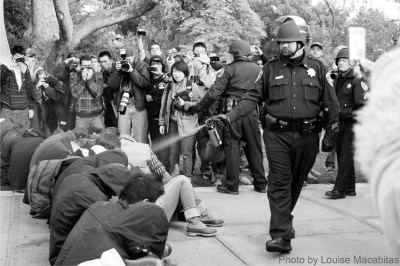
This action was legal for the police to carry out–no violence came to the officer for doing this.
Violence is the basis of power that governments use to project their legitimacy into the world. This is done through explicit means, such as police, military, prisons, laws, and regulations; but also through discreet means such as education, religion, bureaucracy, and especially elections. The discreet channels of what is seen as ‘correct’ or ‘legitimate’ is the most powerful form of controlling the conversations of ‘what is violence’ and who is entitled to it. This creates the context for which violence can be used, and thus justified. The utilization of violence to enforce the status quo (i.e. the law) is justified by the ideological discipline that demands authority to be respected, and obeyed for no reason other than that ‘authority should be respected, and obeyed’.
The fact that we are allowed to vote for one of two representatives that invariably represent the same corporate interest of the status quo, is part of the greater dialog that has us believe the legitimacy of such violence. We are told that we have ‘democratic power’ and that if we can just elect the right person (despite having no sort of electoral process for the police or army), that we will be able to solve our political woes. The truth of the matter is distinctly different.
There are people in this world that can initiate violence against others within explicit legal means with no form of recourse. We are subjects underneath the law and subject to it, and we have masters that are outside and above the law; which ironically calls itself the ‘law enforcement’.
It is the threat of this systematized violence in all capacities (legal, economic, personal) that governments base their power from. It is under this banner of legitimacy via legal violence that all governments have operated through all of history. That might shall make right, and as the official judicial decision, that is final. This is the legal bases of the laws of the state, and this is why they can command your death–because they have the power to do so.
Sadly, there simply has never been any other way to politically organize with the exception of sporadic, unsustainable revolutions that fold back into the same power structure that rely on violence. As revolutionary chaos grows, it harnesses the apparatuses of power for itself, and becomes the Specter of the State, legitimizing its own violence and corruption.
This is the theory of the sovereign–how political institutions create power over one another–it is done from the point of a sword, again, and again; through all of history.
This is the revolutionary struggle for sovereignty. As Foucault pointed out, so long as we are still grappling with this central issue in political theology of enshrining the power of life and violence one over another into a legal system, be it in the form of a senator, minister, police officer, judge or king; there will still be the problem of the great negative forms of power. Masters of all institutions seek to be good masters; but first and foremost, they seek to be masters. There is an alliance among the aristocrats that they all believe there is good reason for them to be masters over the world, and to hold power over all.
Sovereignty as we know it can only exist at the bequeathment from something or someone; or violently take from those same powers through revolution. Once entered into the subject of sovereignty, there is an immediate glaring flaw that a political body must offer sovereignty, or it must be taken by force. This force is what we seek to avoid in the first place, and what has locked humanity into a permanent struggle for power against and over itself–homos lupus homnium. For all of human history, this concept has battled between its two poles: one of accepting the sovereignty offered from another, or to fight that offering to take it for oneself. Violence and physical force are the tools used for the sovereign struggle to establish who is master, and who is slave.
Political History of Sovereignty
The most recent political revolutions of the late 16th century shifted the power by delegitimizing the divine right of kings, and enumerating that power into republican councils. Although there was resemblances of change within the structure of power, what really occurred was a shattering; a mutation of the system and a fracturing of power among many actors. Sovereignty was stripped from kings, and that power was divided among the various ideological structures and repressive state apparatuses that make the modern state.
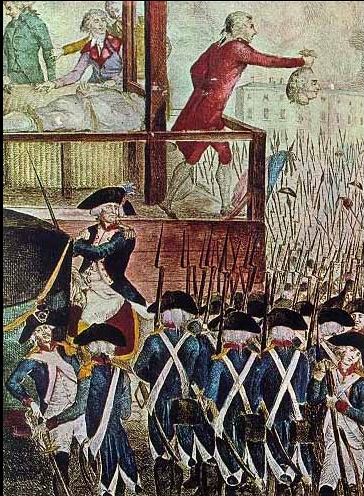 Power is no longer centralized within one body (The King), but is fractured into the government bureaucracy itself as a corporate body. Power, legality, legitimacy, sovereignty, the party as aristocracy, and state-sanctioned violence as a means to execute the law, are all part of this same political-government structure. However, these forces are no longer vested in the one body of the monarchy, but a new body of people outside the law itself. The decree of Divine Right that was once used to inflict the rule by Kings, is today being used to inflict the Rule of the State, but this time under the title of civil liberties.
Invariable, man finds himself under the bludgeon, chain, and whip, happy to oblige, for he no longer has one master, but many! And this time they are for the good of civil liberties! He fails to recognize that the defenders of civil liberties seek to protect their own rights first and foremost at the expense of his flesh.
Violence is the means that compliance with unjust laws are explicitly extorted upon the populous. It is not the justice or majesty of contemporary legal systems that enforces the law; but ruthless, uncaring, violence. It is within the hidden manipulations of what is normal and appropriate that we also find apologists who demand to be ruled as a subjects, not people.
If people are to liberate themselves from such an insidious and total system of rule, it must be upon their own merits to help themselves. People must arm themselves with knowledge, and a willingness to think critically to create a new, and better world. Using the internet, bitcoin, and strong crypto we can create a better world, and establish new laws from within the internet to help save us from global environmental catastrophe that is coming.
Cryptography and Self-Legitimacy
Digital currencies retreats from the theology of sovereignty via violence through creating a new mode of sovereignty. Intangible and non-physical, this new form of power is created through a destituent form of power, one that withdraws and refuses to cooperate with any form of violence.
Legitimacy within cryptography is created from knowable and provably unbreakable secrets that can only exist the digital realm or mathematics. It cares not for what occurs in the physical world, but only that of which it can experience in the digital world: provable mathematics and the sacrament of the private key.
Legitimacy no longer comes from an authority within the current political or economic system, but creates its legitimacy through explicitly existing outside of any states control and the violence they enshrine.
The concept of sovereign is flipped on its head. No longer does legitimacy need to come from state institutions that are empowered via violence, but through provable mathematical systems that are not part of the violence power structure. This creates a new economy system with No God, and No Masters.
No longer do we need to pay for the privilege of our freedom to exchange with one another, or be extorted by the Gods of Government, or their Masters of Capitalism. Bitcoin re-invents money into what it once was, and was always suppose to be–a network of legal and economic exchange for all people everywhere.
—
Next: The Legal Politics of Money

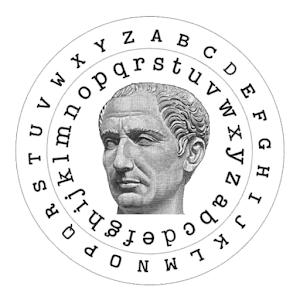

 Here is an
  Though there are many internet cultural groups today, the original ‘internet culture’ would be the cypherpunks. From the cypherpunks came publications like, “
 Through the education system we are taught that governments are good, and the world works the way it does for good reason. We learn from this system that economist can explain why the economy functions as it does, and why we all must work hard to take home our day’s pay. Included in this ideology is the notion that our noble business leaders, who lift the world upon their shoulders, are entitled to a king’s share of the wealth for directing his firm to make a profit; even if this is at the expense of many.
 The Mysticism of Money
 In short:
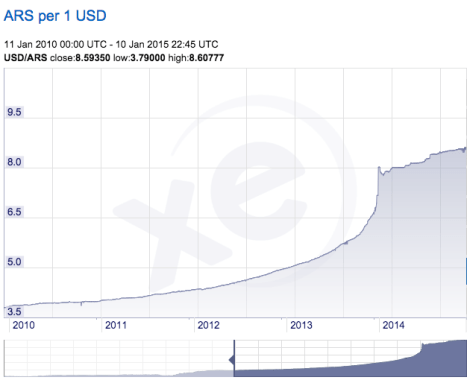 Fiat money by definition has no intrinsic value. The only the value that fiat money has is the threat of legal force if someone refuses it. This is why the value of fiat money is directly tied to the legitimacy of the governments that issue those currencies. Right now, we are seeing a
  To understand Bitcoin, we need to also understand the history of money. This is a long and complex topic that has changed dramatically over the last 400 years, and has a total history of more than 3000 years. In order to understand both money, and bitcoin, we need to understand that there are two distinct functions that money has, that are independent of each other, but both influences money’s value: the payment function of money, and its storage of value function.
 near the end of WWII, the allies came together in secret meeting in Bretton Woods to negotiate how the new global economy would be built. Keynes wanted an

 “Lenin is said to have declared that the best way to destroy the capitalist system was to debauch the currency. By a continuing process of inflation, governments can confiscate, secretly and unobserved, an important part of the wealth of their citizens. By this method they not only confiscate, but they confiscate arbitrarily; and, while the process impoverishes many, it actually enriches some. The sight of this arbitrary rearrangement of riches strikes not only at security, but at confidence in the equity of the existing distribution of wealth. Those to whom the system brings windfalls, beyond their deserts and even beyond their expectations or desires, become ‘profiteers,’ who are the object of the hatred of the bourgeoisie, whom the inflationism has impoverished, not less than of the proletariat. As the inflation proceeds and the real value of the currency fluctuates wildly from month to month, all permanent relations between debtors and creditors, which form the ultimate foundation of capitalism, become so utterly disordered as to be almost meaningless; and the process of wealth-getting degenerates into a gamble and a lottery. Lenin was certainly right. There is no subtler, no surer means of overturning the existing basis of society than to debauch the currency. The process engages all the hidden forces of economic law on the side of destruction, and does it in a manner which not one man in a million is able to diagnose.”


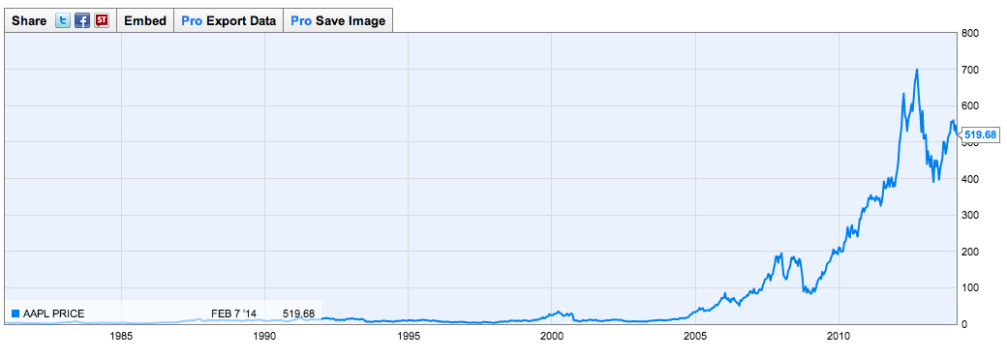


 “The opening up of new markets, foreign or domestic, and the organizational development from the craft shop and factory to such concerns as U. S. Steel illustrate the same process of industrial mutation-if I may use that biological term-that incessantly revolutionizes the economic structure from within, incessantly destroying the old one, incessantly creating a new one. This process of Creative Destruction is the essential fact about capitalism.”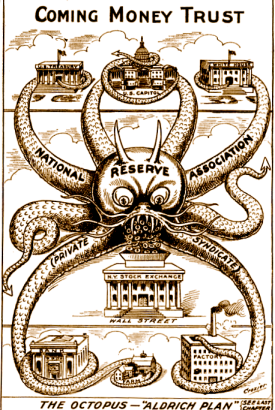
 Once upon a time, storing your money within a bank to offer you the security of knowing that your money was safe and secure. In addition to helping one secure their money, banks also found the opportunity to make the use of money sitting in their vaults through allowing easier access to the funds through services like checks, debit cards, and credit cards. As these services evolved, the banking system started taking more and more ‘convenience fees’ for access your very own money! But what is one to do when all banks are part of the greater monopoly that makes up the various national money systems? Until now, nothing–but now because bitcoin challenges this monopoly, and it is much more efficient than this monopoly, it is going to break this monopoly. The fiat money system just cannot compete–it’s too slow, too prone to fraud, and there are too many fees. This is in addition to inflation that has proven itself time and time again to destroy the savings of all the general public. When one see all of the benefits that bitcoin offers and understands how it works, there simply is no good reason to keep using fiat–it’s just shitty money.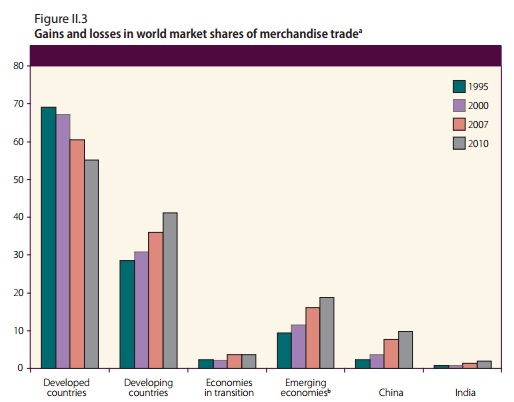

 What Creates Transaction Cost?
 The Law and what it offers
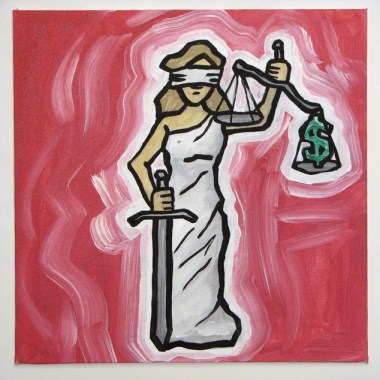 Those who are closes to the centers of power are the ones that will benefit the most from the law, or the corruption of the laws. This is why
  Bitcoin Theory